The software profession has spent years designing, developing, and shipping tools. Tools that, when learned, give people the power to create reports, videos, programs, and much more. But the pervasiveness of tools may have implanted the wrong instinct in our heads in a world of AI. Tool first, outcome second can now (and perhaps should) be flipped on its head.
Loads of AI use today is building a lot more of the tools we're used to, but much faster. With today's capabilities, though, we can actually skip the tools and jump straight to the outcomes they enable. A tool was always just a means to an end. If AI can get you to the end directly, why stop at the tool?
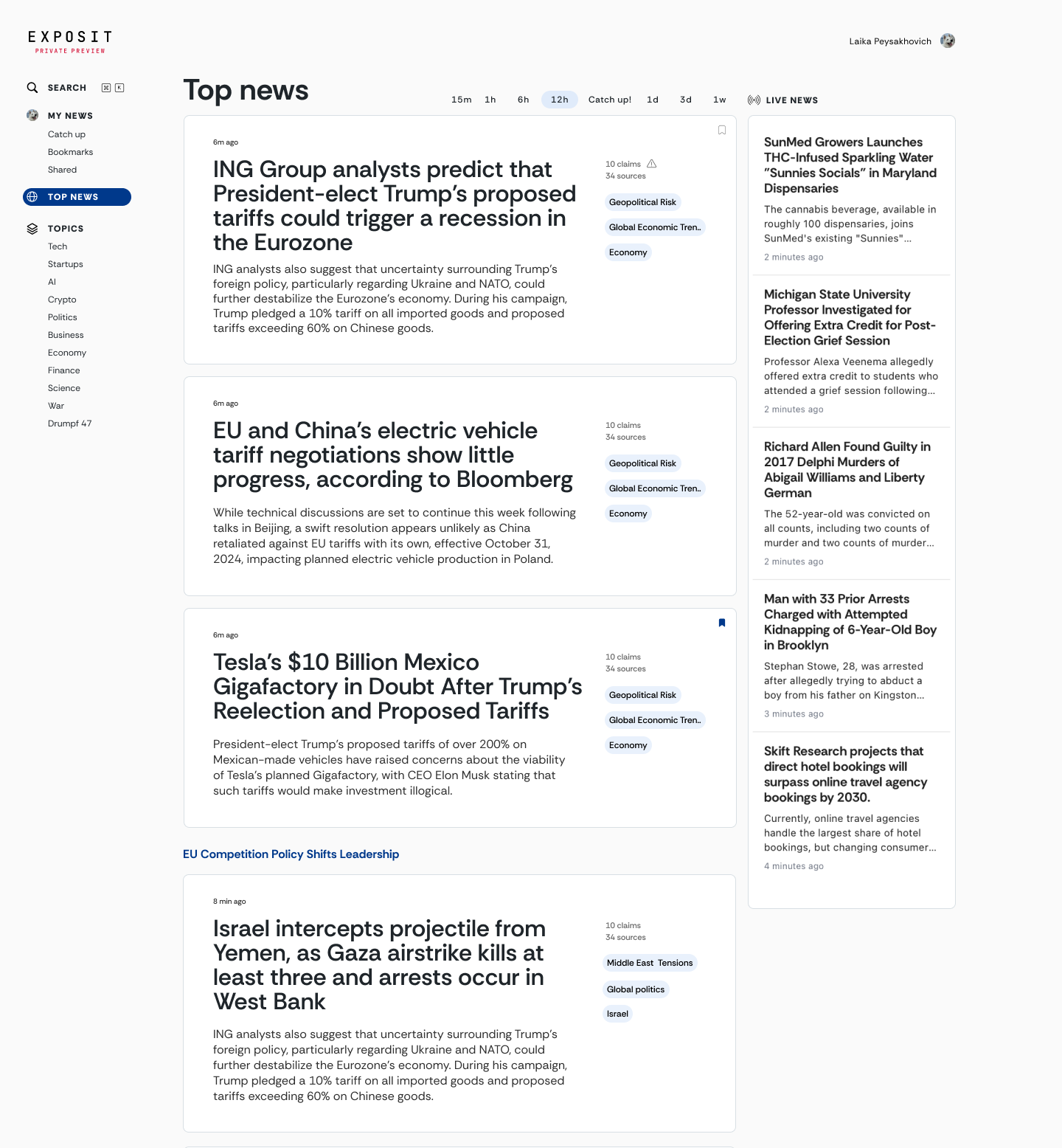
As usual, a concrete example helps. Two years ago, we built an AI-powered newsroom called Exposit. The system would find, aggregate, and report on global news. Behind the scenes AI agents would do the curating, writing, and editing that you'd find in a physical news room.
So it's not surprising that we presented the end result like a news site: headlines, articles, categories, etc. People could search, scroll, or navigate to find the news they were interested in. In other words, we built a news tool. Like all the other news sites out there, just run by AI.
As we continued to iterate on the product, we added a feature that allowed people to ask about a specific topic or news story and we'd compile a personalized report for them based on the latest news, related events, people, locations, and more. Really quickly this feature became the dominant way people used the site.

I've come to refer to this approach as just-in-time content: generated in real-time, for a specific person, with a specific need, at a specific moment. Instead of writing something once and hoping it fits everyone who comes along, you build a corpus that can be recombined endlessly and produce a timely, relevant answer on demand.
From the personalized report on Exposit, people could go deeper into articles, topics, entities, sources, and more. In other words, they started from the outcome: here's the news that you asked for. And if they wanted to, later engaged with the tool(s). Outcome first, tool second.
I do a similar thing on the Ask LukeW feature of this Website. Originally people had to ask a question before they got anything. Now each day I grab my most recent tweets, articles, and files and compile a "what's Luke thinking about now" answer automatically, so people get something to read without needing to ask anything. It's a small change, but it aligns with that larger theme: skip the tools and make the outcome. In this case, starting with an answer instead of requiring a question.
Now I ask myself (and pester others with): are you building another tool, or are you delivering the outcome the tool was supposed to produce? I've found just asking that question inspires new ways of solving problems.